
Many times, I think research methods has a very dull kind of connotation to the students. To help students get excited about a subject like research methods, I think we should give them a taste of what it feels like to construct a research project. I propose we take the first half the semester doing bookwork. Learning how research is conducted and the different ways of conducting it. In the second portion of the semester, students would group up and create a research project together. They would learn to work together in a research team and create a research project that they found to be interesting. Not only will they be broadening their skills in a group communication, but they will be furthering their understanding of the research field.
Course Description:
In this course, we will focus on research, and how research is conducted in the communication field. We will cover scholarly research articles and break them down as a class. We will learn the differences in research and learn how to read and understand research data.
Course Learning Goals:
By the end of this semester students will have a clear understanding of the importance of research in a communication setting and the ways of conducting that research. They will learn how to read the data, and how the data is collected from the research projects.
Assignments:
The semester will be split up in two halves. The first half of the semester the students will be doing book work; blog posts, milestones, and tests. In this time, the students will be gaining a clear understanding on how and why research is conducted, and how to implement those things into their own research. They will learn the differences between qualitative data and quantitative data, and how that data is collected. The second half of the semester will be the application of their knowledge. Each of the students will be given the opportunity to showcase their knowledge by creating a mockup research project. They will be working alongside an imaginary research team comprised of their fellow classmates. There will be milestones, that will keep Dr. Delaney in tune with the groups progress. At the end of the semester, the students will give a group presentation covering what they learned in their research, and how they decided to conduct that research.
Category: Uncategorized
Blog 9
Highschool Drugs, Lets Talk About It.
A qualitative study was done by Jennifer A. Kam, Janice L. Krieger, Erin D. Basinger & Andrea Figueroa Caballero, on substance use amongst high school students. Kam, among many things specializes in substance use communication with parents and friends at the University of California Santa Barbara. Krieger has published over 80 journal articles and serves on the Editorial Board of Health Communication and the Journal of Health Communication. Basinger attained a Ph.D. at the University of Illinois, and now is the assistant professor in the Department of Communication Studies at the University of North Carolina-Charlotte. Caballero received her Ph.D. at University of California, Santa Barbara is now an Assistant Professor in the Department of Communication at Missouri University.
Their research focused on four specific parts. Peer Substance Use: How one peer using substances can affect fellow peers, Refusal Strategies: How adolescents refuse substance use, Peer Intervention: How peers intervene with fellow peer drug use, and Peer Communication Frequency: How often adolescents discuss drug use amongst one another.
Twenty-five students from two different high schools in Illinois agreed to give their students an opportunity to be qualitatively interviewed for this study. The students varied in age, with a mean age of 16. Nearly half male and half female participated with varying ethnicity’s, however the vast majority being Non-Latino White. The students were notified about the study via school flyers. The students were cleared to participate with their parents consent. The students were asked ten questions to start, two of which pertained to this study. The questions then went further and asked about the use of specific drugs ranging from alcohol and cigarettes to more illicit drugs like marijuana, in themselves and also in their fellow classmates and friends.
Alcohol: past 30 days, half of the students had not consumed alcohol or had only consumed alcohol for religious services, 12.5% had consumed part of or one whole drink, 8.3% had 2–3 drinks, 16.6% had 4–7 drinks, and 12.6% had 8 or more drinks.
The study found that more kids had smoked marijuana than kids who had smoked cigarettes, and fairly comparable to marijuana was the alcohol use. Possibly it answer to their peers, painting these specific substances in a positive light. (interesting/comedic stories?)
The students were then asked about how they think their friends may react to them doing these drugs and also how often they think their peers may take part in use of the afore mentioned substances, and also how they reacted in similar situations.
The study then focused in on how or if the students have/would discuss substance use with their friends, and how/if they went about it. Five types of reactions were identified: (a) no big deal, (b) shock, (c) resist, (d) dismiss, (e) strengthen, and (f) engaged in substance use.
When discussing substance use amongst friends who had used drugs, the majority seemed to shy away from the topic for several reasons ranging from not feeling close enough to that friend, to not feeling like its any of their business. Though some students did report that confronting that friend actually strengthened their friendship, most of the students did not. In other words, most kids just didn’t feel the need to address this sort of things amongst their friends. It seemed as though an unspoken rule that you just let sleeping dogs lye.
The fact that this study was done on mostly white high school students in Illinois greatly limits the way of relation to the population. There is potential differences with respect to ethnicity, gender, socioeconomic status, developmental stages, region, and user/nonuser status that could change this study in a big way. This study was all ‘self-reported’ data as well, which can also limit how reliable the study was.
This study was done to help identify weaknesses in our school system, leading to drug abuse amongst teens. We learned that many kids refuse substances, but few talk to the peers offering them. In closing, high schools may be able to put a substance prevention intervention class in affect as a new strategy to lessen the amount of teenage abusers.
Blog 7
- Attachment Theory: a framework for the study of how children develop secure or insecure attachments as a function of early interaction with caregivers. (Laura K. Guerrero, Lisa Farinelli & Bree McEwan, 2009)
- Emotional Intelligence: or trait emotional self-efficiency, a personality trait that involves a constellation of self-perceived emotion-related abilities and dispositions that are typically measured via self-report instruments (Petrides & Furnham, 2001, 3rd party).
- Social Exchange Theory: Social exchange theory is a social psychological and sociological perspective that explains social change and stability as a process of negotiated exchanges between parties (LGS, 3rd party, wiki.org).
- Error Management Theory: an extensive theory of cognitive biases that refer to biases and heuristics that have survived evolutionary history because they at the least, held slight reproductive benefits (LGS, 3rd party, wiki.org).
- Recalled Reality: the way someone remembers something from their past. (can be flawed) (Let’s Get Serious, 2011)
- Relationship Maintenance: keeping up on a relationship, in this case, using cell phones (The Effects…, 2012).
- Conflict Communication: How couples deal with disagreements in their relationships. (Typically, + or -) (Trait Emotional Intel…, 2008)
- CPRS: is a 5-point Likert-type scale ranging from 1 (strongly disagree) to 5 (strongly agree) designed to assess participants’ perceptions of cell phone rules in their romantic relationships (The Effects…, 2012).
- Relationship Satisfaction Scale (RSS): a unidimensional measure consisting of seven items on a 5-point scale typically ranging from, unsatisfied to extremely satisfied (The Effects…, 2012).
- Confirmatory Factory Analysis: used to test whether measures of a construct are consistent with a researcher’s understanding of the nature of that construct or factor (Attachment and Relational Satisfaction…, 3rd party, wiki.org).
Looking forward, I definitely need to focus in and get a much clearer and more concise reason for my research. I hope to find a purpose for my paper and I believe this will greatly help me write my annotated bibliography.
Blog 6
The Study
A study was conducted on middle aged men and women who identified as either Gay or Lesbian. The test asked a few different key questions about their past, and then the answers were evaluated and
How technology may be helping or hurting the LGBTQ community!
Bradley J. Bond Æ Veronica Hefner Æ Kristin L. Drogos – Springer Science+Business Media, LLC 2008.
This study was to discover the information seeking process of the LGBTQ community when finding their sexuality, and how big of a part current technology has played in that process. The main questions in the study consisted of, 1. How much media was used in the coming out process, 2. Information seeking practices, 3. Family openness, 4. Lonliness, 5. self esteem.
Both men and women identifying as either gay or lesbian sexuality, were involved in this test. The first hypothesis was stated that, “Participants would report using media more than face-to-face interpersonal relationships as a means to gather information during the coming-out process.” The second hypothesis was, “Claiming that participants will report using the Internet more than other forms of mass media as a research tool during the coming out process.” The third hypothesis predicted that younger participants would be more likely to claim use of the Internet as an information-gathering tool than would older participants, and the fourth hypothesis examined the tone participants used to describe their information-seeking experiences with regards to specific media. All four hypothesis were supported in this test using a Chi-Square.
This study showed us how family, television, the internet, and magazines were used in the coming out process of these individuals. It found that ‘family’ and ‘internet’, drew the strongest support from our research.
This study showed how the affect of not only mass media, but also family, can have on a young individual who is going through a possible change from the norm, in their sexuality.
Research Methods 5
This first measurement was nominal, and in regards to the phrase “I Love You”, and whether males or females typically say it first. This is interesting to me because my study is on communication in relationships.
- “Participants included 47 heterosexual couples (94 total individuals) drawn from an online community sample (mean age = 33, range = 18–69). This sample was taken from a pool maintained by a northeastern university, though the actual location of participants ranged throughout the United States. Out of these 47 couples, seven disagreed about who confessed love first in their relationship. There were no systematic biases for gender among those couples that disagreed. All participants were involved in long-term, committed relationships, lasting from 14 to 376 months (M = 84 months).”
“Participants were informed that they were required to currently be in a romantic relationship in which “I love you” had been said at least once by at least one partner and that other current romantic partners would be recruited to complete the study as well. Upon agreeing, participants were directed to an online survey featuring relationship questions, including who confessed love first in the relationship. At the conclusion, partner e-mail addresses were collected and partners were contacted. We collected demographic information from each partner to ensure couple validity. Once each member of a couple completed the study, each participant was mailed $10.”
The strength of this method is that the couples that couldn’t agree on who said it first were discarded from the data set and that there also is a very wide range of relationship maturity. The weakness of the study is that there were only 47 couples involved.
In study number two, I believe it is the ratio level of measurement. This study was interesting to me as well because it is the effects of intimate communication amongst couples.
“2. Participants included 84 female and 35 male undergraduates from a southwestern U.S. university (mean age = 21). All procedures took place on paper questionnaires, and participants received course credit as compensation. Participants completed the study in groups of one–three.
This study used a 2 (participant sex) × 2 (confession timing: pre-sex, post-sex) between-subjects design. Participants received a paper questionnaire that included two sections. The first section presented a scenario asking participants to imagine they were beginning a new romantic relationship with someone they found “attractive and interesting.” The scenario explained that the couple had started dating and detailed many common behaviors that the couple had engaged in (e.g., spending time with each other, eating together, meeting friends). One of these details—whether sexual intimacy had occurred in the relationship thus far—constituted the experimental manipulation. Half of the participants read that they had already been sexually intimate in the budding relationship, whereas the other half read that they had not yet been sexually intimate. This detail was included in the bigger list of details with no special attention drawn to it and thus acted as a subtle cue to the onset of sexual activity. At the end of the scenario, all participants read that, 1 month into the relationship, their partner made the first deep statement about romantic feelings by saying “I love you.” Participants then indicated how much happiness they felt after hearing “I love you” from their romantic partner on a scale ranging from 0 (“not at all”) to 7 (“very much”).
The next item after the sex/no-sex scenario assessed judgments about how long into a relationship it becomes acceptable to say “I love you.” Participants were asked again to imagine that a dating partner had recently confessed love. Participants then responded to this item: “When does it generally become acceptable to admit love in a new romantic relationship?” The choices included 1 (“first day”), 2 (“two to three days”), 3 (“one week”), 4 (“two to three weeks”), 5 (“one month”), 6 (“two to three months”), 7 (“six months”), 8 (“1 year”), and 9 (“two or more years”).
Finally, given that participants who are already in committed romantic relationships may feel less happiness when imagining someone else express their love, we measured current romantic relationship status to control for potential differences between single participants and participants currently in committed relationships (exclusion of this variable did not change the results reported next).”
The weakness of this study is that there isn’t an even number of male and female data, so we cant assume this to be as accurate as it would be with more participants. The strength is that it gives a true difference between how men and women perceive the phrase and how they react to it.

*Emotional reactions to imagining (Study 4; Panel A) or recalling (Study 5; Panel B) being told “I love you” as a function of sexual activity in romantic relationships.*
Body Language and Relationships
- How does non-verbal communication tie into our relationships?
- Start by searching “Google Scholar”, because it is the easiest way to find good, credible articles for your research.
- Search non-verbal communication between men and women, because this should be a highly discussed topic, because everyone wants to learn more and more about the interaction between men and women.
- Click on Non-Verbal Communication in Human Interaction.
- Since it is a book source, we find the chapter we would like to draw from, cite the source, and take the information we found and apply it to our research.
- I decided to keep the same search idea, because I believe there are still plenty of other sources under this search.
- I click on my second article titled, Gender and Emotion in Context.
- I looked for info that differentiated between the interactions between men and women. when I find something I like, I take the source, cite it, and take the information that I need for my paper.
- https://books.google.com/books?hl=en&lr=&id=DFK1QwlrOUAC&oi=fnd&pg=PA395&dq=non+verbal+communication+between+men+and+women&ots=3ohDPpHF3C&sig=wyLdTnd2KaGtItmYaL1YbhFsbaU#v=onepage&q=non%20verbal%20communication%20between%20men%20and%20women&f=false
- I looked for info that differentiated between the interactions between men and women. when I find something I like, I take the source, cite it, and take the information that I need for my paper.
- Click on Non-Verbal Communication in Human Interaction.
- I decided to change my search question to freshen up the results a little bit.
- I searched Non-Verbal Communication Body Language.
- I clicked on the one that said Non Verbal Sex Differences. (Side note, almost 100% sure Judith Hall has a patent on non-verbal communication).
- In this study she is discussing the differences males and females communicate.
- I like this study so I again give the credit, and take the information I need to further strengthen my research.
- http://psycnet.apa.org/record/1985-98125-000
- I like this study so I again give the credit, and take the information I need to further strengthen my research.
- In this study she is discussing the differences males and females communicate.
- I clicked on the one that said Non Verbal Sex Differences. (Side note, almost 100% sure Judith Hall has a patent on non-verbal communication).
- I simply searched Non-Verbal Communication
- I clicked on Non Verbal Communication by Lluis Payrato.
- This article is from a scientific standpoint, so this would be a good strong source.
- I clicked on Non Verbal Communication by Lluis Payrato.
- Lastly I searched Non-Verbal Behavior Dominance
- I don’t exactly know for sure where I would put this in my argument, but I believe I could dig deeper into this article and apply my findings in this article back throughout my other citing’s.
- Search non-verbal communication between men and women, because this should be a highly discussed topic, because everyone wants to learn more and more about the interaction between men and women.
- Start by searching “Google Scholar”, because it is the easiest way to find good, credible articles for your research.
RM3
I decided to take the “Extra Pair Interests: The Design of a New Questionnaire” study, because lets face it, sex is interesting. It has such a deep effect on us humans, whether it be good of bad! The research was concerned with the perception and understanding of what constitutes extrapair interests in people over 18 years old. I don’t want to call the questions intrusive, but they were most definitely intimate. The consent was clearly explained and easy to understand, and I didn’t feel as if I was being forced to answer the questions in any way, shape, or form. The questions made me think deep about my own relationship, and I was sort of interested in seeing results from other people, however that information was never disclosed because of the promised anonymity of the consent form. It didn’t take long at all, only about twenty minutes or so. after taking the short “quiz”, I feel as though I have a much better understanding of the layout of these studies.
Research Methods 2
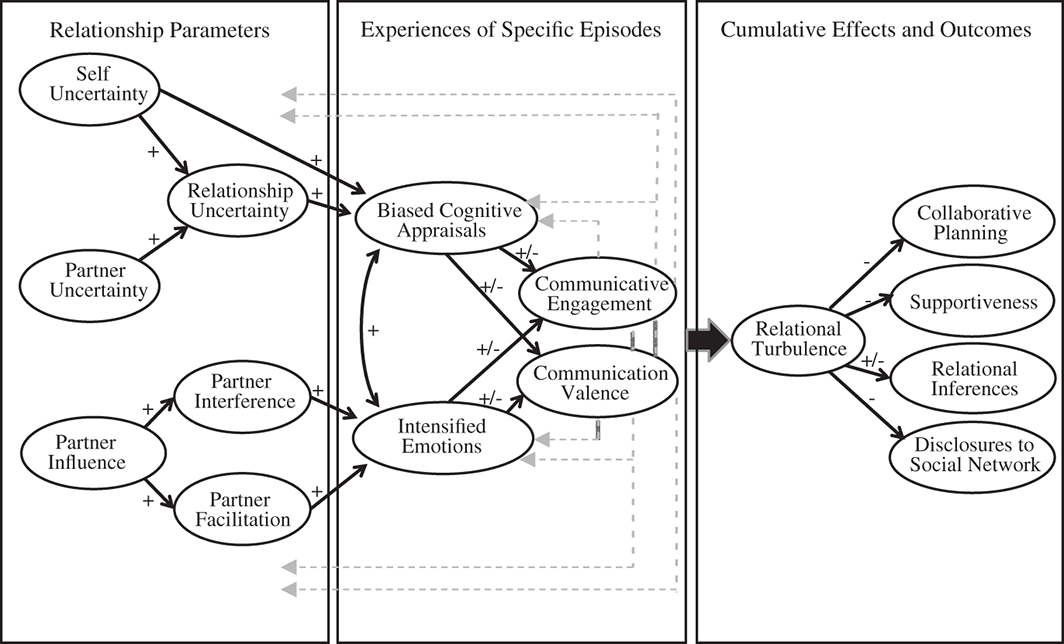
I started off searching Ebsco, however it seemed far quicker to use Google Scholar and simply search Human Communication Research. I found this article fairly easy and thought it was funny because we had discussed one of Knobloch’s writings in class before. The title of this article is Relational Uncertainty and Relationship Talk within Courtship: A Longitudinal Actor–Partner Interdependence Model. I found this article interesting because relationships aren’t easy and I think its helpful for growth in the relationship to allow the uncontrollable seasons of those relationships.
Kristina Scharp and Elizabeth hall cited Solomon and Knoblochs Relationship Turbulence Theory, stating “it could be helpful to better understanding the relationship between antecedents and outcomes.” Also stating that disclosure is the first step in supportive communication.
Kristina Scharp must have valued Solomon and Knoblochs study pretty significantly, because she cited them again in another one of her studies, however it wasn’t in the same way. In her study, Your Not Welcome Here: A Grounded Theory of Family Distancing, she discusses mental health and its likelihood of playing into the Relational Turbulence Theory, either before or after the illnesses bear their head/s.
The third citation was by Yuliya Yurashevich , and she concluded that The RTT is the best fit for her project on impactful romantic relationships because of its ability to capture the effect of relational uncertainty on satisfaction during a turbulent moment in the relationship’s history. She also added that the RTT was used to investigate the outcomes of emotional support in dating couples and reluctance of military personnel in discussing their deployment during reunion.
The majority of what these three authors discussed were very related, Yurashevich was the only one that linked it to something different than just everyday romantic relationships. She dug in a bit deeper when she discussed the RTT’s link to relationships in military couples, but besides that, all of the authors hit close to the same area in there studies.
Seeing how the authors all agreed upon the RTT being a solid theory to base many studies off of, it only strengthened my research on this topic, and made me think of it in a far more in depth way than how I viewed the diagram alone. It wasn’t that the diagram was so packed full of information I didn’t know where to start, its just far easier to understand it when broken down by others even if it was nearly the same in all three cases.
References
Scharp, K. M., & Dorrance Hall, E. (2017). Family marginalization, alienation, and estrangement: questioning the nonvoluntary status of family relationships. Annals of the International Communication Association, 41(1), 28-45.
Scharp, K. M. (2017). “You’re Not Welcome Here”: A Grounded Theory of Family Distancing. Communication Research, 0093650217715542.
Solomon, D. H., & Priem, J. S. (2016). Outcomes of emotional support in dating relationships: Relational turbulence or sentiment override?. Personal Relationships, 23(4), 698-722.
Yurashevich, Y. (2017). ” Less than a Relationship:” Transitions into an Impactful Romantic Relationship.
Research Methods 1.
Communication isn’t always easy. Mark L. Knapp is here to help. Mark Knapp, a professor at the University of Texas at Austin is so well known for his work in the field of communication, there is an award named after him. The Mark L. Knapp Award in short, recognizes people who have made significant scholarly contributions to studies in the communication field especially interpersonal communication. Knapp served in the U.S. Army before attending the University of Kansas and receiving his bachelors and Masters degree, and his PhD from Pennsylvania State University. He was employed at the University of Wisconsin-Milwaukee from 1965–1970; Purdue University from 1970–1980; the State University of New York at New Paltz from1980–1983; the University of Vermont in 1983; and the University of Texas at Austin from 1983–2008. He even received teaching awards at every university he taught at. Knapp is best known for his works in interpersonal communication and human relationships, and he also was the former editor of Human Communication Research and was the president of both the ICA and NCA . Knapp is the author of Nonverbal Communication in Human Interaction, Lying and Deception in Human Interaction, Interpersonal Communication and Human Relationships, and co-edited the Handbook of Interpersonal Communication. Knapp is not only an author in the communication field, but also created something called, “The Relationship Model”…
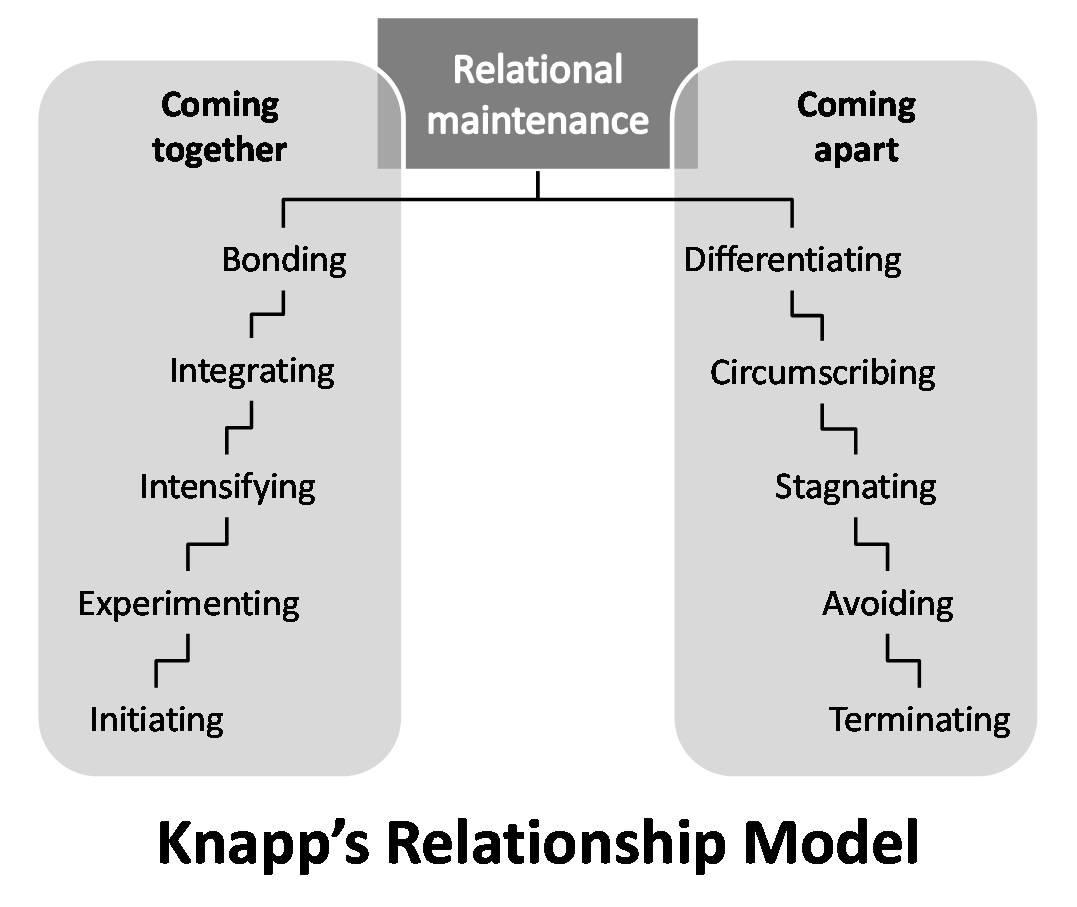
Though Knapp is presumably a genius, his Relationship Model is simplistic, but also profound in a way. I always say, “In relationships, you either marry or you break up”, but would have never thought to think of it as a model like this. After reading about Knapp’s credentials in the communication community, I am intrigued to give his books a read.
The Journey Begins
Thanks for joining me!
Good company in a journey makes the way seem shorter. — Izaak Walton

 Griffs Blog